

If you spend any time in the kitchen preparing meals, having a basic understanding of the various culinary knife cuts will help you make better food. Many knife cuts are very easy to achieve, and learning to use the right ones will not only improve your results in the kitchen, it will also make you look like a total badass!
Don’t be scared off by the term “knife cuts.” It simply refers to the many different ways of cutting and shaping food. In culinary parlance, every shape and size has a different name, so that when reading a recipe, the person cooking will know exactly what to do to.
This fancy stuff isn’t just for show. The size and shape of vegetables in a recipe affects the flavor and texture of a dish, and how long it needs to cook. Small pieces cook faster than large pieces and allow several different flavors to be part of the same bite. Large pieces will retain a more recognizable flavor and rustic texture.
Using the right knife cut will get all of the pieces to be the same size so they cook evenly.
Read This Before You Start Practicing Knife Cuts
- If you like having fingers, always use a sharp knife that is large enough for the task. A good, sharp chef’s knife is ideal. Dull knives are dangerous; they require significantly more force and can slip easier.
- Remember to wash or peel the vegetable if needed, and remove roots or stems and any blemishes before you begin cutting.
- Hold the vegetable that you’re cutting securely against the cutting surface with your fingertips curled inward away from the blade like a claw.
- Always place the cut side of a vegetable flat against the cutting board for extra stability before making the next cut.
- Making fancier knife cuts may feel wasteful because it creates a lot of unused vegetable scraps, but don’t toss those out! Freeze them in a plastic bag to use for stocks, or simmer them in broth and puree to make a simple soup.
10 Knife Cuts to Improve Your Kitchen Skills
Ready to level up in the kitchen? Use this guide to help you master 10 different knife cuts.
1. Rough chop (aka big chunks)
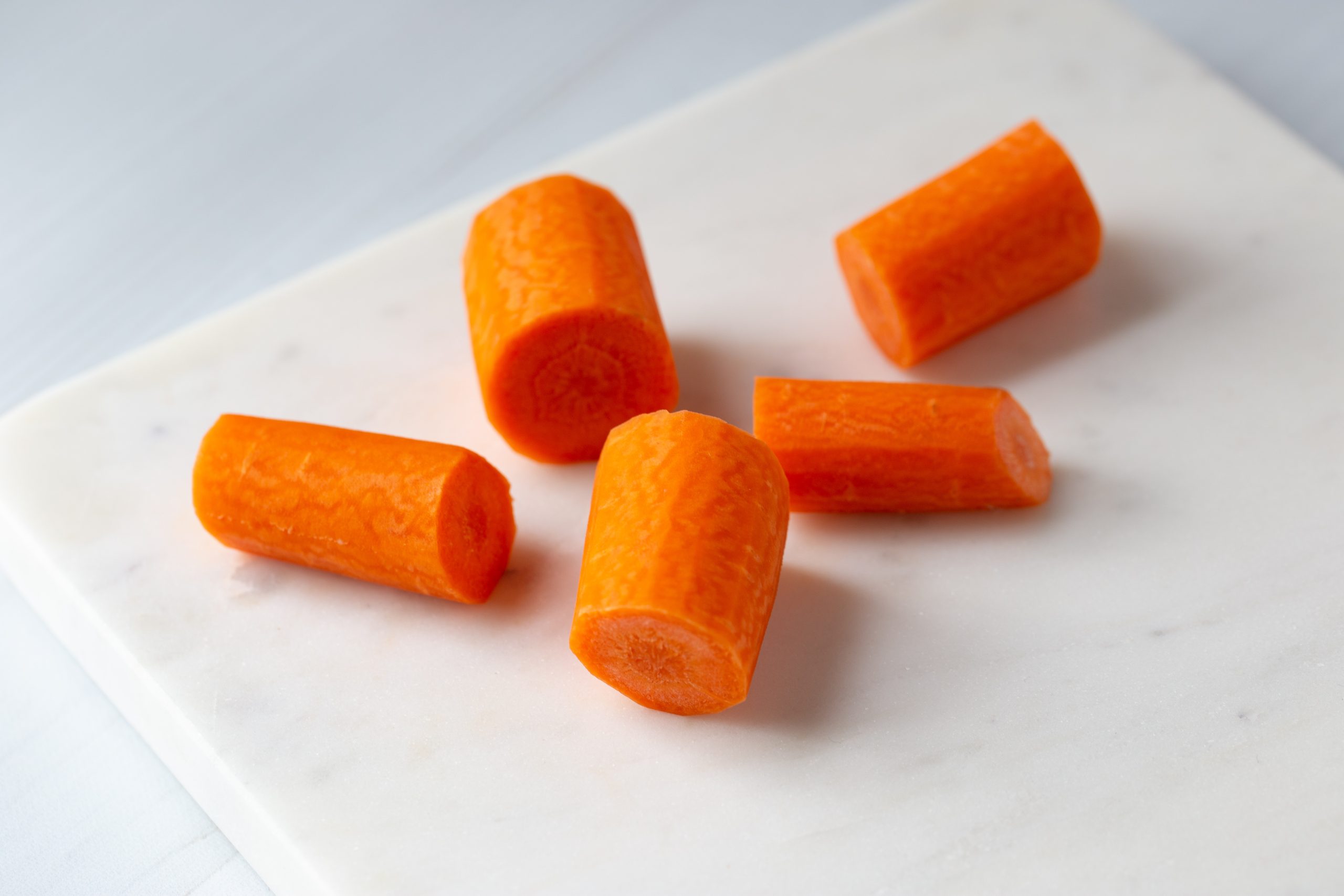
A rough chop is exactly what it sounds like. Hack a vegetable into a few pieces and you’ll be on the right track. Just aim to make the pieces approximately the same size — an inch or two in diameter — so that they cook evenly. It’s so easy, you could do it with your eyes closed (but please don’t!).
This knife cut is generally used for vegetables that will flavor stocks or get pureed or mashed, but it can be a game changer for speeding up your time in the kitchen.
Rough chop any and all vegetables for roasting, steaming, stews, and chilies. The pieces will be larger, but heartier, and you’ll shave precious minutes off your meal prep activities.
2. Chop (aka the go-to)
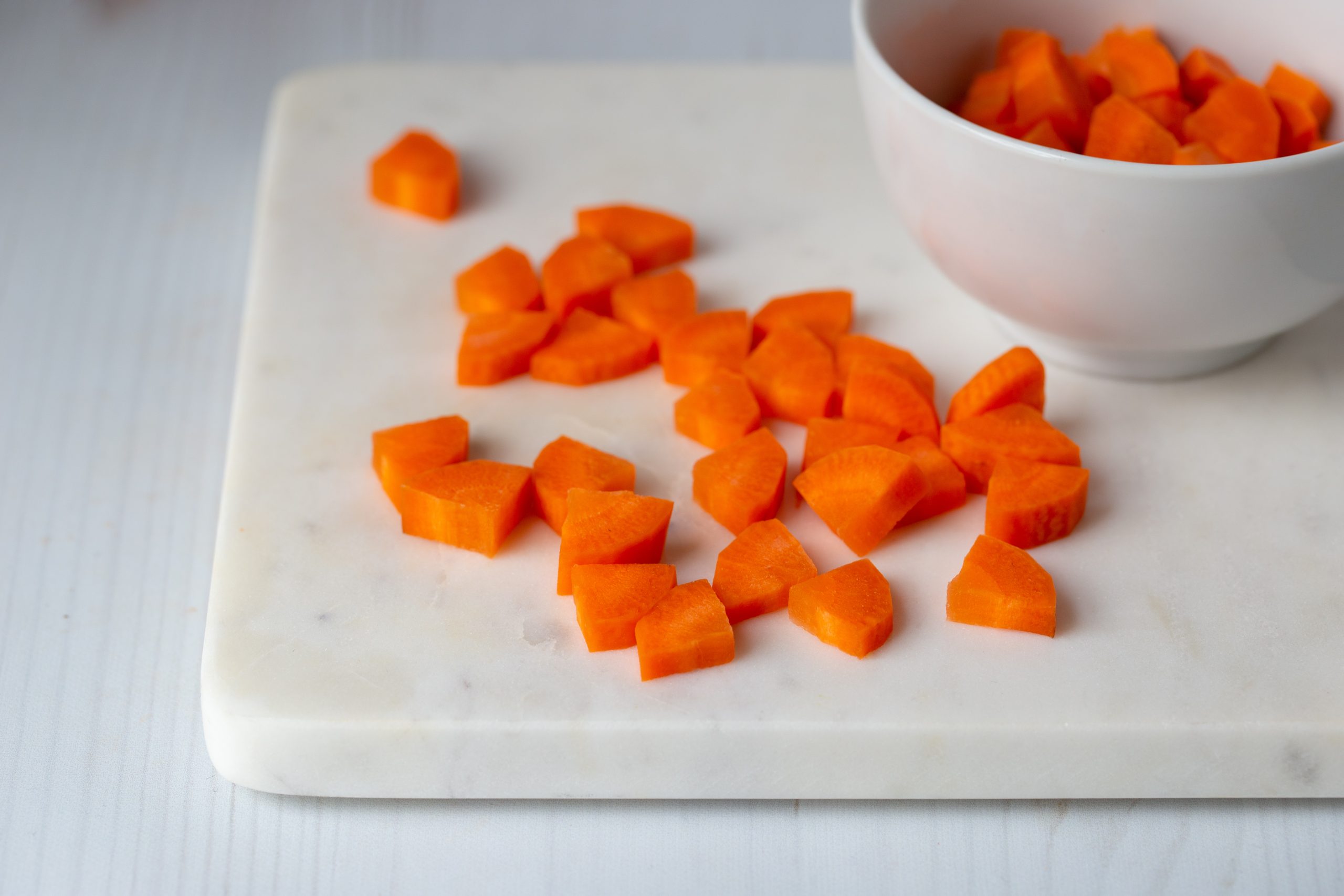
Smaller than the rough chop, the basic chop is the home cook’s bread and butter, and your go-to knife cut for most recipes. Use it whenever precision, shape, and size don’t matter.
For this knife cut, simply cut the vegetable into small pieces of similar size so that a few pieces can fit together on a spoon.
The trick to better chopping is to let the shape of the vegetable guide how you cut it. If it’s round like a potato, start by cutting the vegetable into slabs of even width. If it’s long and thin like a carrot, cut it into spears first.
If the carrot is thick, cut it lengthwise once more, then cut all the pieces in half. To finish this task quickly and get more uniform pieces, gather the carrot sticks into a bundle and slice them to the desired size.
3. Rondelle (aka coins)
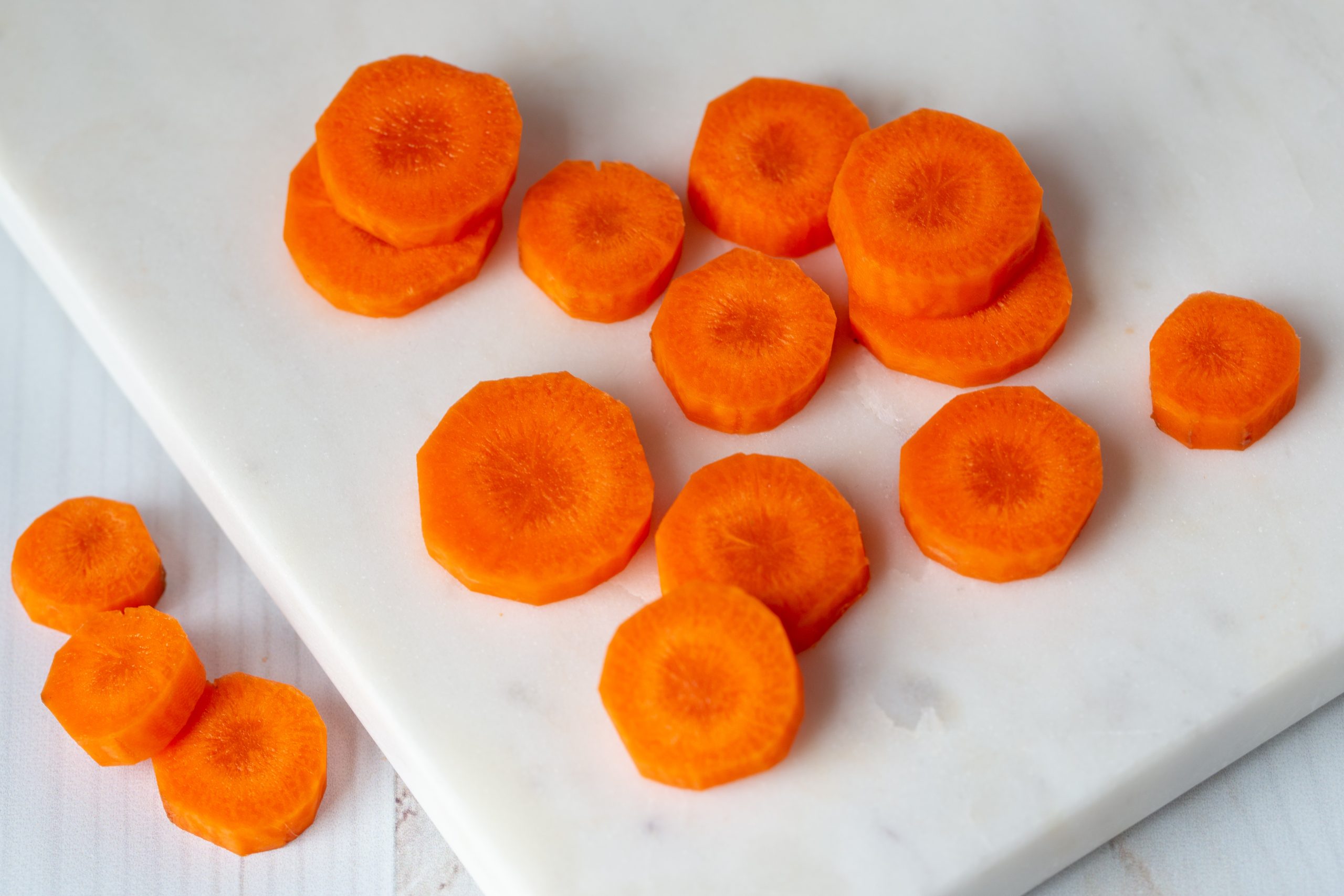
This straightforward knife cut yields pretty, round vegetable slices that can be steamed, sautéed, roasted, or eaten raw.
The easiest way to cut cylindrical vegetables (like carrots, zucchini, and cucumbers) is to slice them into coins, which in French cuisine is known as a rondelle. (Hence the name of the cut!)
To do this, hold a knife perpendicular to the vegetable and make even slices, usually ⅛- to ½-inch thick.
4. Bias (aka coins with flair)
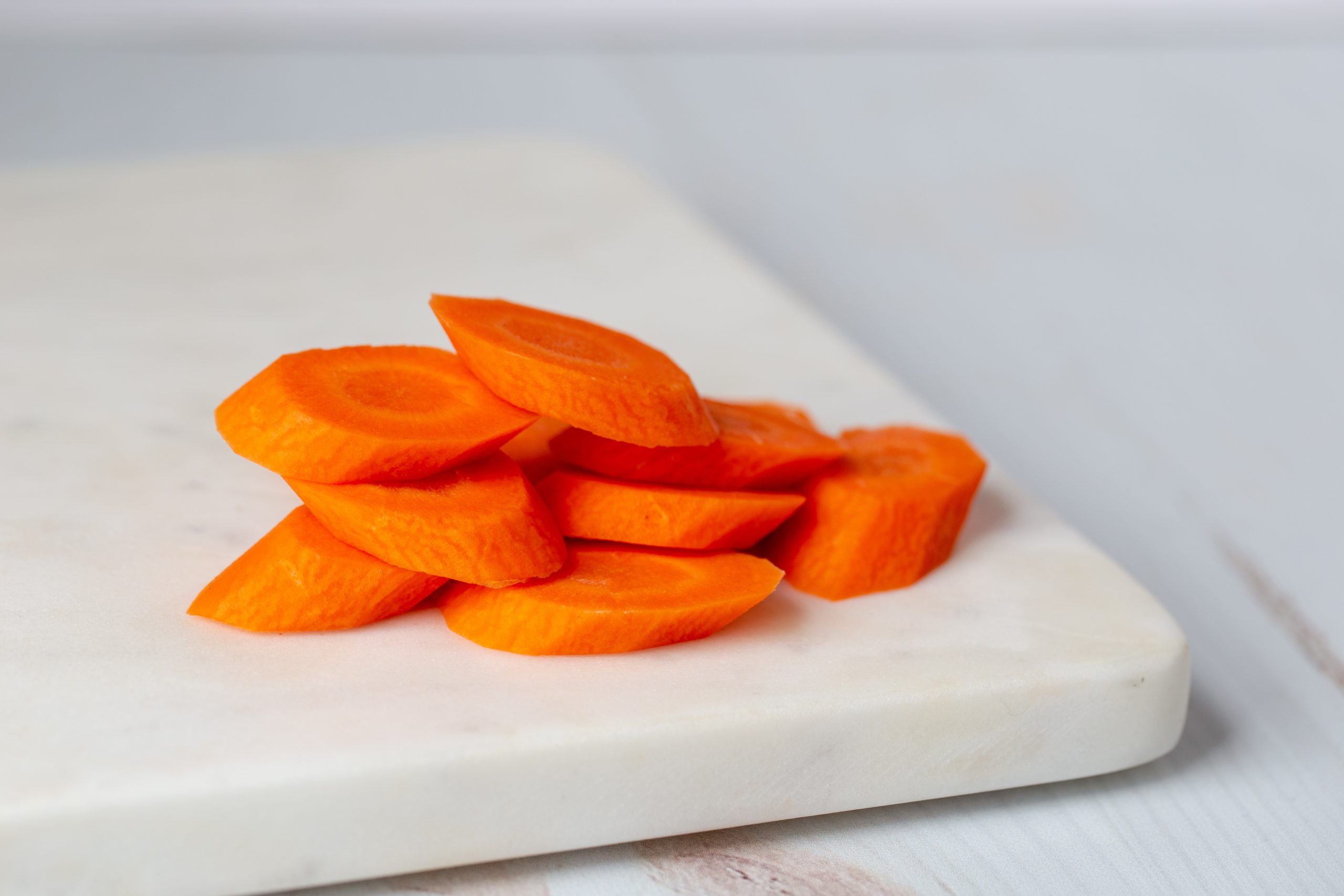
Ready to take things to the next level? Give your vegetable coins some extra je ne sais quoi by cutting them on a bias, or diagonal.
From a cooking stand point, a bias cut isn’t much different from a rondelle cut. But it does add visual interest, so it’s perfect for when you want to show off a little bit. Plus, it’s pretty easy to do with any cylindrical vegetable. Simply hold the knife at a 45 degree angle to the vegetable and slice. That’s it!
5. Batonnet (aka sticks)
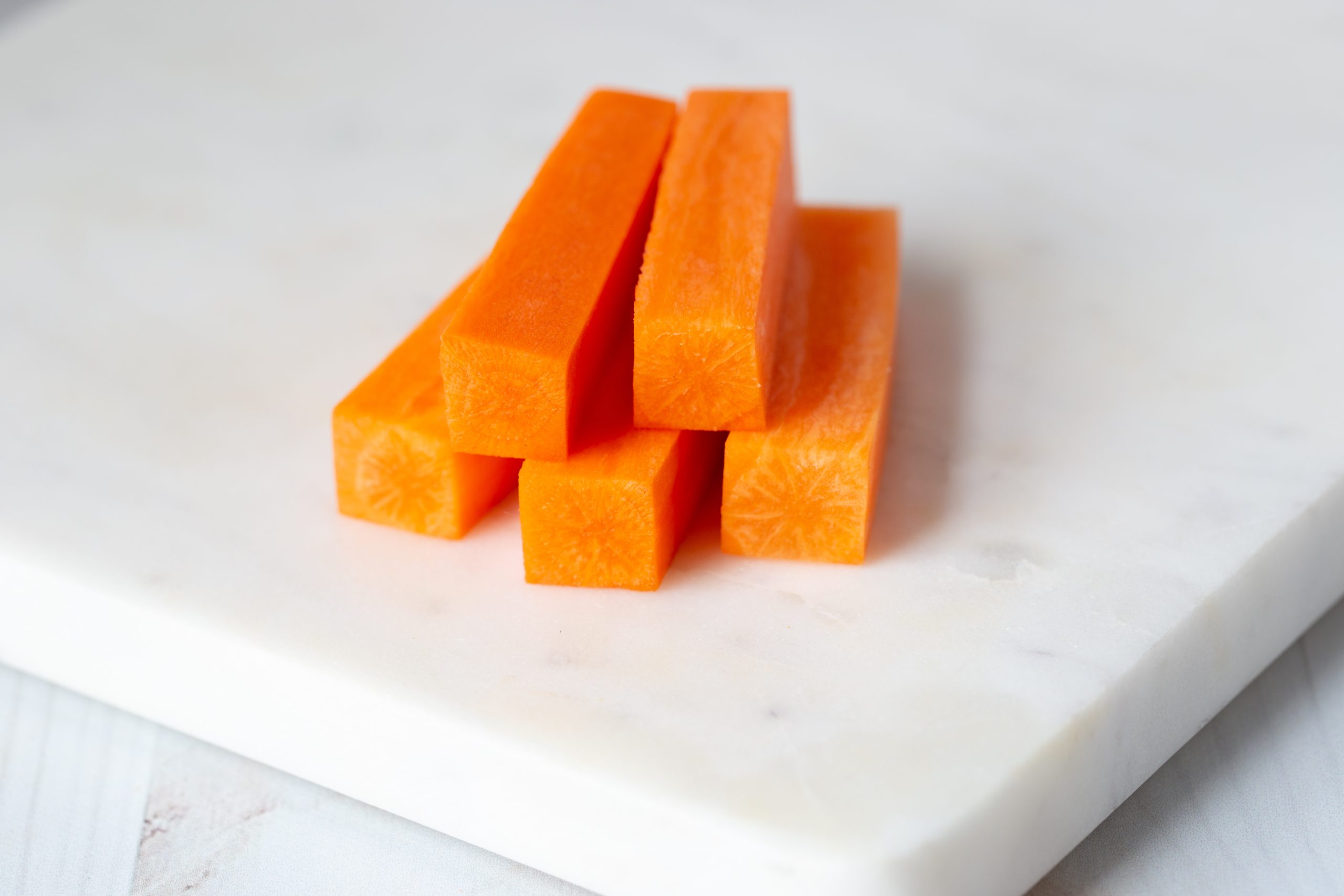
Make your veggie tray a thing of beauty with batonnets. These aren’t your grandma’s carrot sticks… unless granny went to the Cordon Bleu.
Batonnets are uniform ½-inch by ½-inch by 2½-inch sticks. This is the knife cut to practice first if you want to graduate to more advanced cuts like the dice, julienne, and brunoise since it’s the starting point for all of them.
To do this cut, first, remove the top and tail of the vegetable. Then, slice each side to square them off. Finally, cut the vegetable into 2½-inch sticks.
If you’re starting with a larger vegetable, like a potato or jicama, square off the round edges, then slice it into ½-inch thick slabs, and then cut each slab into sticks.
6. Dice (aka cubes)
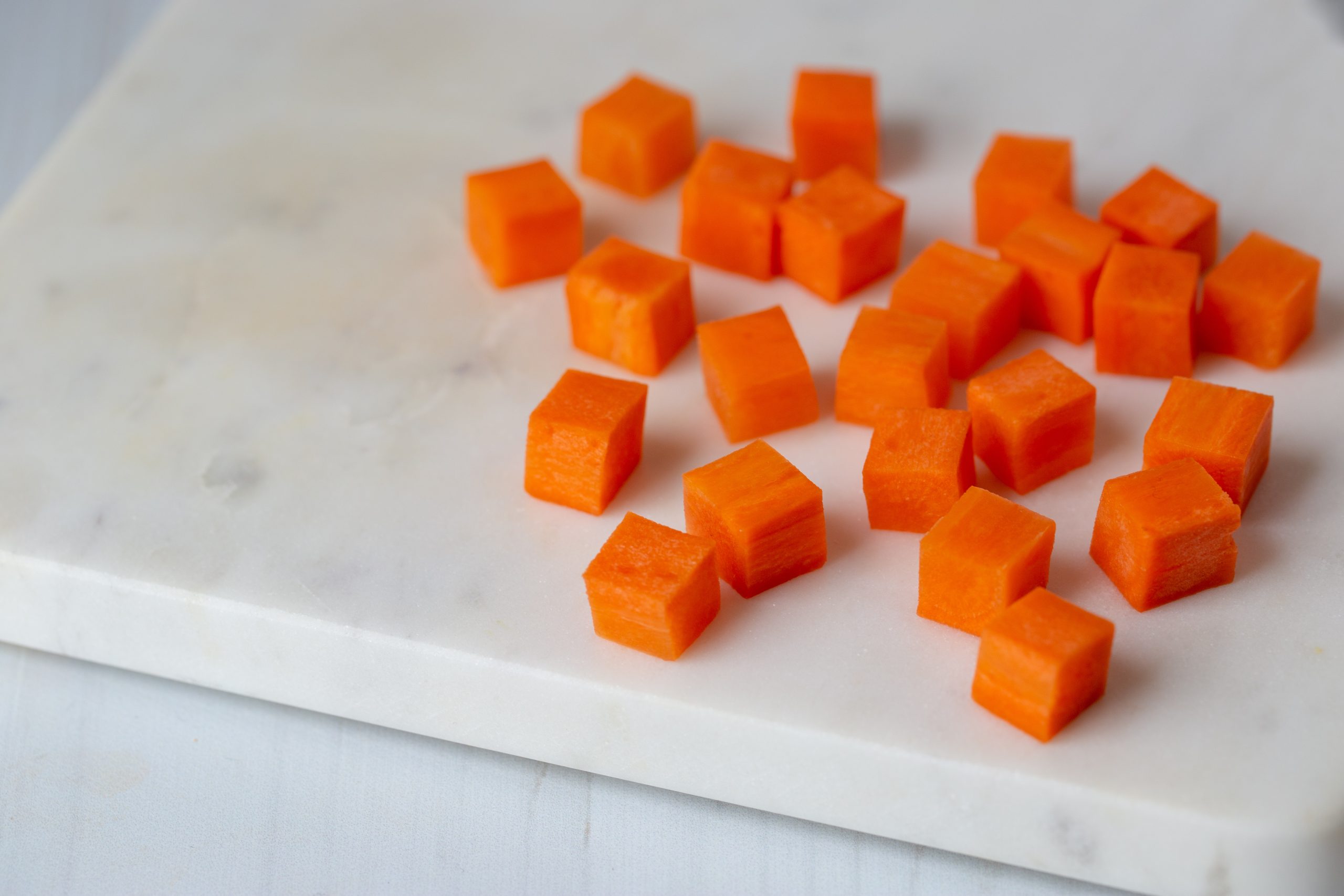
If you run into a recipe that call for diced ingredients, this really just means to cut them into cubes. There are a few different sizes of cubes:
- A large dice, known as a Carré, refers to a ¾-inch cube.
- A medium dice, or Parmentier, is a ½-inch cube (pictured).
- A small dice, or Macédoine, is a ¼-inch cube.
Things get even smaller from there with finest dice, the Brunoise.
To dice, first you want to slice off the round sides of the vegetable to create flat edges. Then, cut that into slabs that are the width you are aiming for. Cut those slabs into batons of the same width, then into cubes.
The size of dice you use will depend on the dish. Large dice is most common for root vegetables and is great for hearty stews. A medium and small dice can be used for most vegetables and will elevate the appearance of any dish from home-cooked to restaurant worthy.
7. Julienne (aka matchsticks)
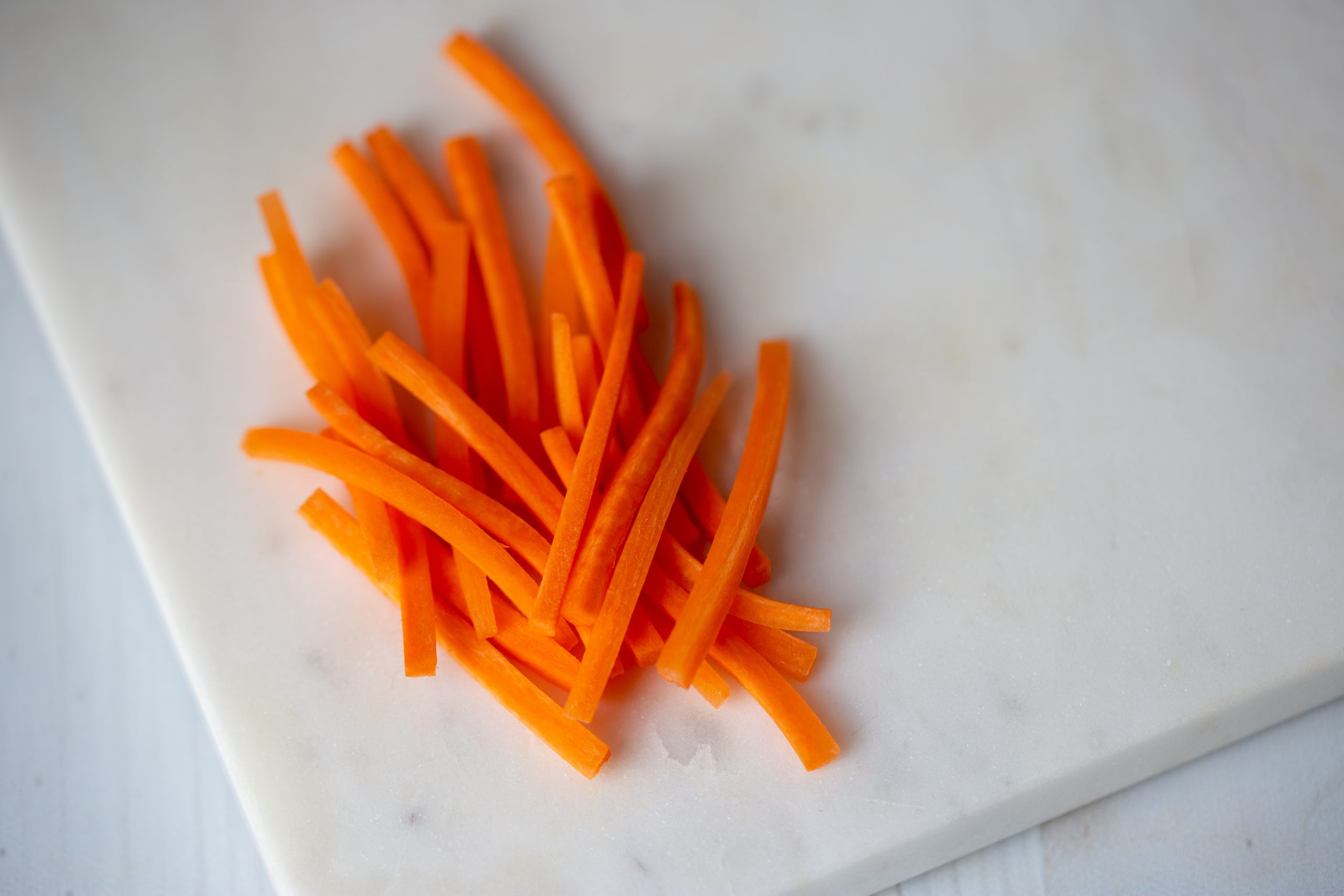
Ooh, now we’re getting fancy. The julienne is an advanced knife skill that will make your dishes look more refined. You can use it in stir-fries, as raw garnish, or when tough vegetables will be mixed with tender vegetables, like the broccoli stems in a kale and broccoli salad.
I’m going to tell you the professional way to julienne, and then recommend you do something completely different.
For a proper julienne, start with a batonnet (remember that from above?) and slice it lengthwise into four ⅛-inch thick planks. Then, cut each plank lengthwise into matchstick-sized pieces that are ⅛-inch wide, leaving you with thin strips that are squared off at the ends and exactly ⅛-inch by ⅛-inch by 2½-inches long.
If you aren’t trying to pass a culinary exam, then we highly recommend another method that will give you slightly less perfect, but perfectly acceptable matchsticks. Plus, it will save boatloads of time and create fewer wasted scraps!
Simply slice whatever vegetable you are using on a slant into ⅛-inch thick rounds that are two to three inches long. Stack those slabs, then slice into ⅛-inch strips. Voila, matchsticks!
8. Brunoise (aka fancy pants)
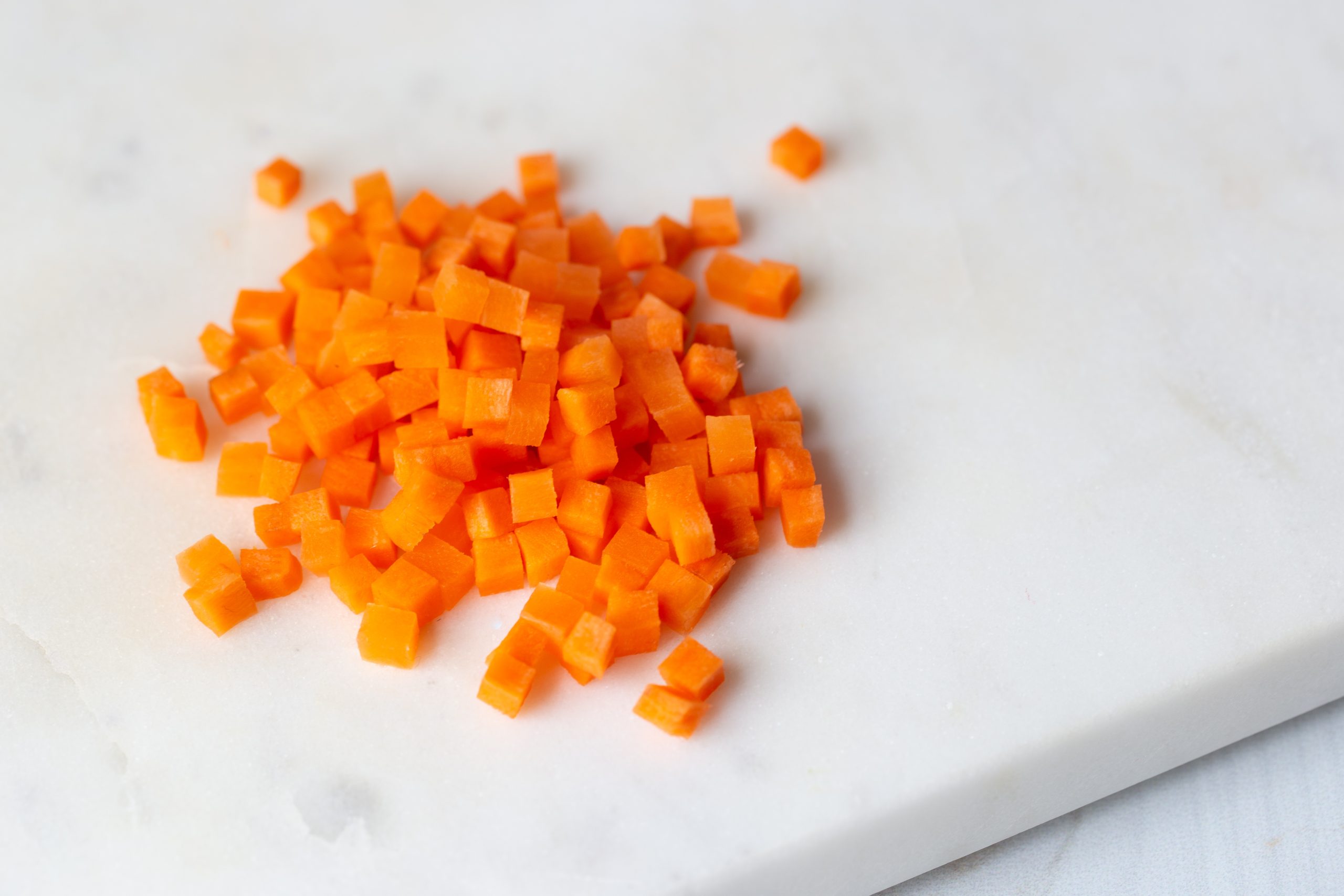
When you’re aiming to impress or have unlimited free time on your hands, break out the brunoise.
This fussy, meticulous knife cut takes a lot of time and effort, but those precise — and supremely satisfying — tiny cubes might well be worth your while. You’ll look like a pro, and feel like a culinary superhero.
To achieve this finest dice, start with a batonnet, cut it into a julienne, then stack your matchsticks and cut them into ⅛-inch cubes.
Use brunoise vegetables in sauces, make a delicate vegetable soup, or film your very own tiny food videos.
9. Chiffonade (aka how to cut herbs)
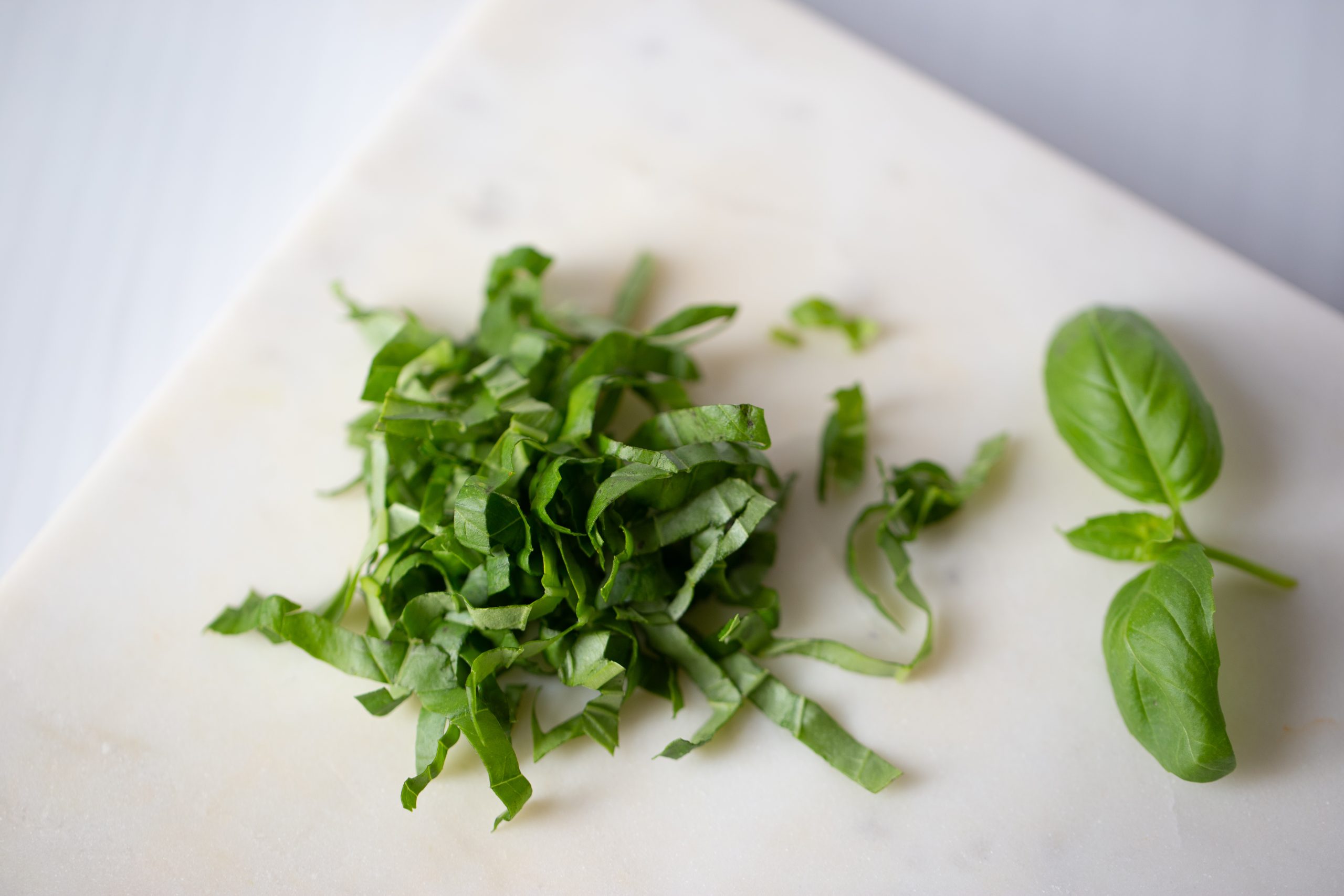
To the novice cook, delicate herbs can be tricky little leaves to tame. They’re small and flat already… how do you get them even smaller? I once watched a friend chop basil for a caprese salad one leaf at a time — that is not the most efficient way and took what seemed like an eternity.
That’s where the easy-peasy chiffonade cut comes in. Start by gathering or stack the leaves of fresh herbs like basil, parsley, or sage (or even larger leafy greens like kale or mustard greens) and then roll the stack like a cigar. Slice the roll evenly into thin ribbons. That’s it!
If the herbs will be used as garnish, just gently toss them to separate the ribbons before adding them to your dish.
10. Mince (aka as small as it gets)
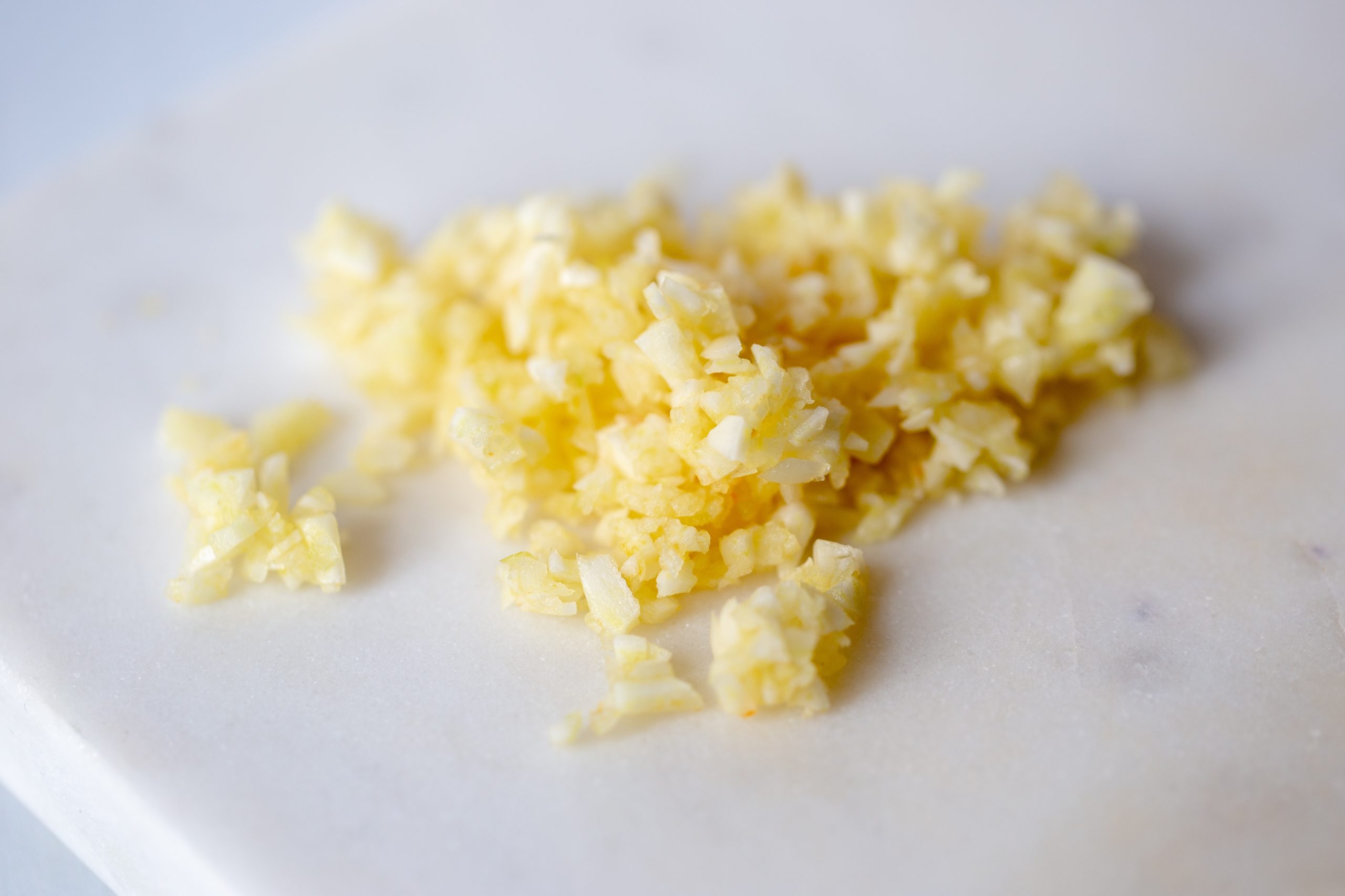
When you want to finely chop a pungent ingredient like garlic, ginger, fresh herbs, or citrus peels so that tiny pieces can be evenly distributed throughout your dish or used as garnish, it’s time to mince.
To mince garlic, for example, lay your knife blade flat on the clove then press down firmly with the heel of your palm and give it a good whack. Slice the smashed garlic clove, then turn those slices perpendicular to the blade and keep chopping until the pieces are very small.
This amount of mincing will usually do, but there is a final step that with make your mince superfine: use both hands.
Grip the knife handle in one hand and use your free hand to press the tip of the blade against the cutting board. Rock the curved blade back and forth until the pieces are as tiny as you can get them. Every so often, use the sides of the knife to scrape the pieces into a pile. If scraps stick to the blade, carefully wipe them back into the pile and keep cutting.
Practice this technique every time you chop garlic or herbs and you’ll look like a culinary wizard in no time.
BONUS: Shredded (aka grated)
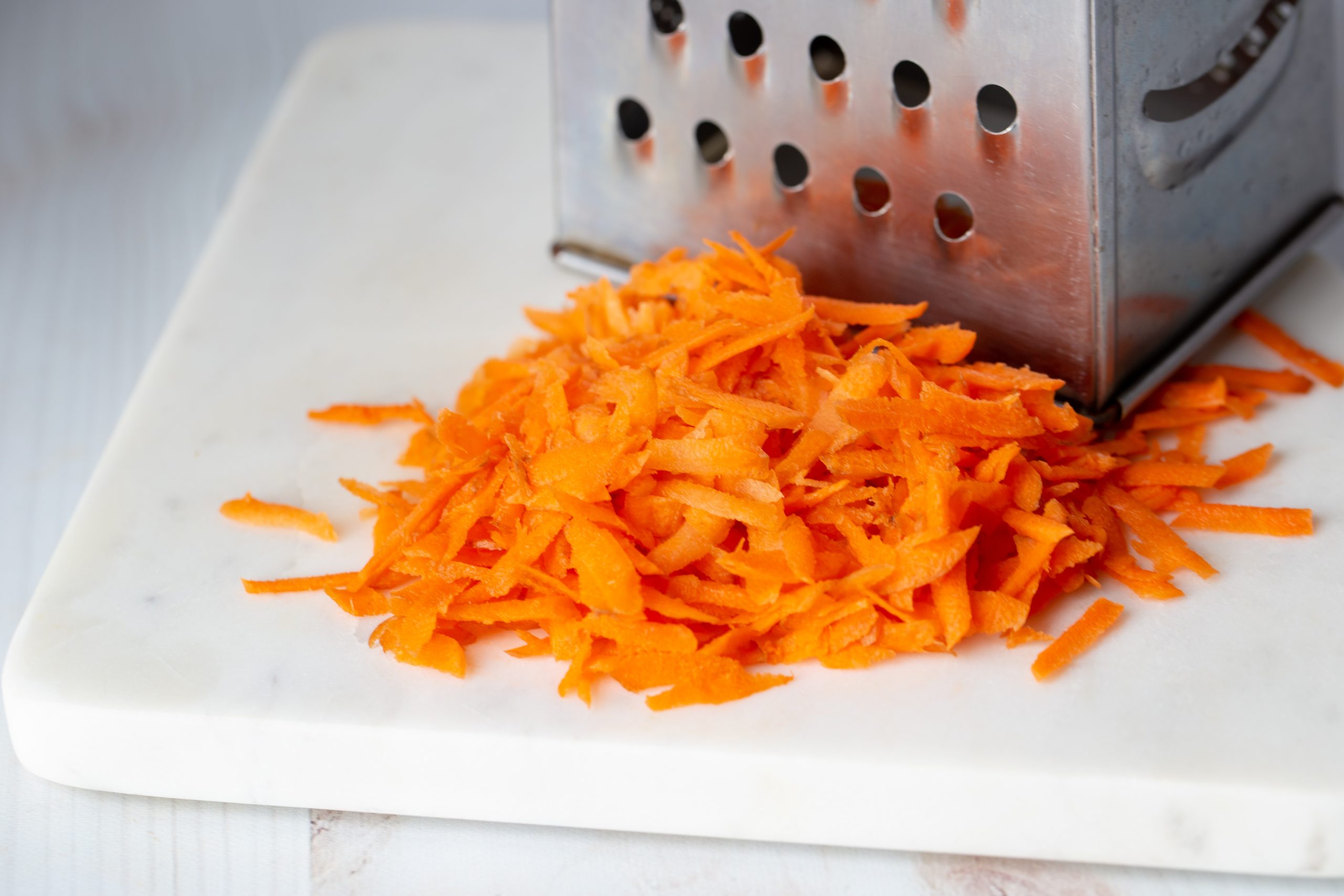
OK, you got us, this isn’t a knife skill, and you already know how to do it (hopefully). But, shredded vegetables are called for in many BODi recipes, so knowing how to utilize this tool will make recipes even more simple.
The box grater is an underused kitchen tool, and once you discover its many uses, you’ll wonder why you have only been using it for cheese.
Use the largest holes of a box grater or the shredding disc of a food processor to make cauliflower rice, shred carrots and broccoli stems for salads, zucchini for bread (or burgers!), potatoes for latkes and apples for oatmeal or muffins.
Try grating onions instead of chopping them for pasta sauces, or create a fresh topping for toast or a bright salad dressing by slicing a tomato in half and grating the flesh into a bowl. Watch out, Gordon Ramsay!